Gifu
Shirakawa-go
A mountain village built to shed five metres of snow
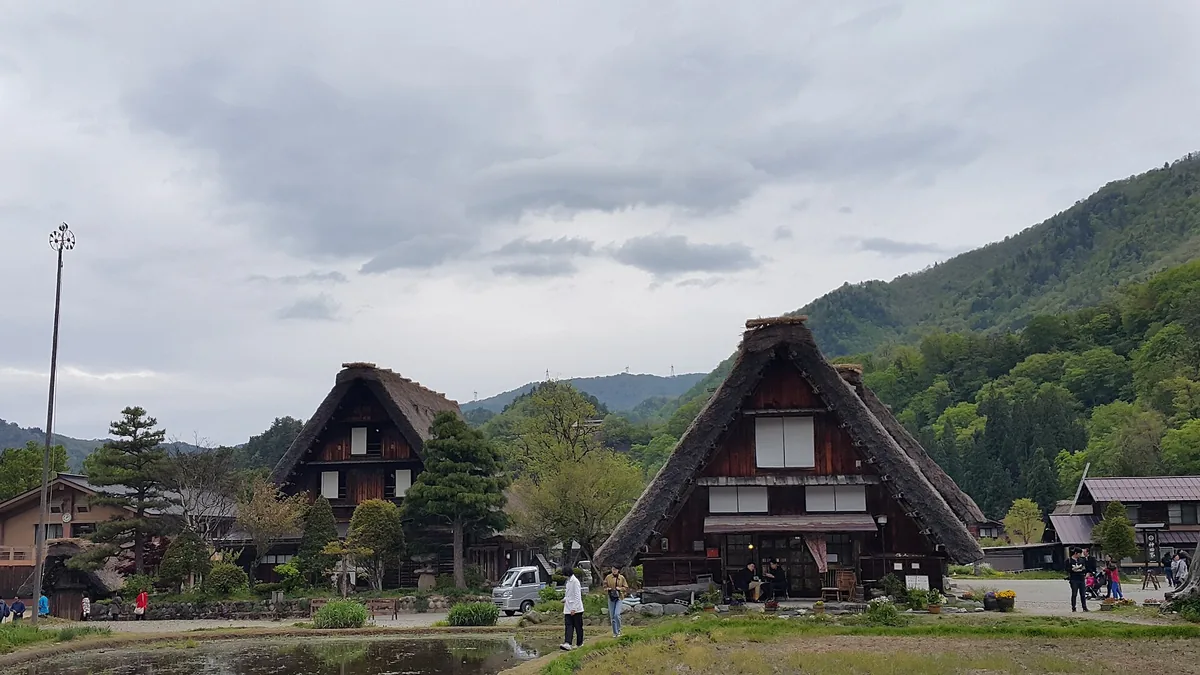
Photo: Chainwit. · CC BY 4.0
A UNESCO-listed village of gassho-zukuri farmhouses, their steep thatched roofs designed to carry the heavy snow of the Japanese Alps.
Architecture that answers to weather
Gassho-zukuri means 'praying hands', for the steep triangular A-frame roofs that let snow slide off rather than crush the house. Some of these farmhouses are 250 years old, built without nails and re-thatched every few decades by teams of villagers. The upper floors were used for silkworm farming, a major winter industry in a valley where rice growing was limited by cold.
Winter is the postcard, but the other seasons are better value
The famous image is the village under deep snow during the January and February light-up events, which require advance reservations and timed entry. In spring, the terraced rice paddies fill with water; in autumn the hills turn red and gold. In all seasons, staying overnight in a gassho house gives you the village after the day-trippers leave, which is a completely different place.
A living village, not a museum
About 600 people still live in Ogimachi, the main village, and the conservation rules are strict: no selling or renting of buildings without village approval, and no building materials that clash with the traditional palette. Respect private property, stay on the paths, and remember that the viewpoints above the village are on private land with an entry fee.
Three things not to miss
- The Shiroyama viewpoint over the village in autumn
- Winter light-up, by reservation only
- An overnight stay in a gassho-zukuri farmhouse
In pictures
Every photo in this guide is freely licensed, credited, and available at full resolution from Wikimedia Commons.
Nearby in the atlas