Yamanashi & Shizuoka
Mount Fuji
A perfectly symmetrical volcano that has been painted for a thousand years
Photo: a Wikimedia Commons contributor · CC BY-SA 2.0
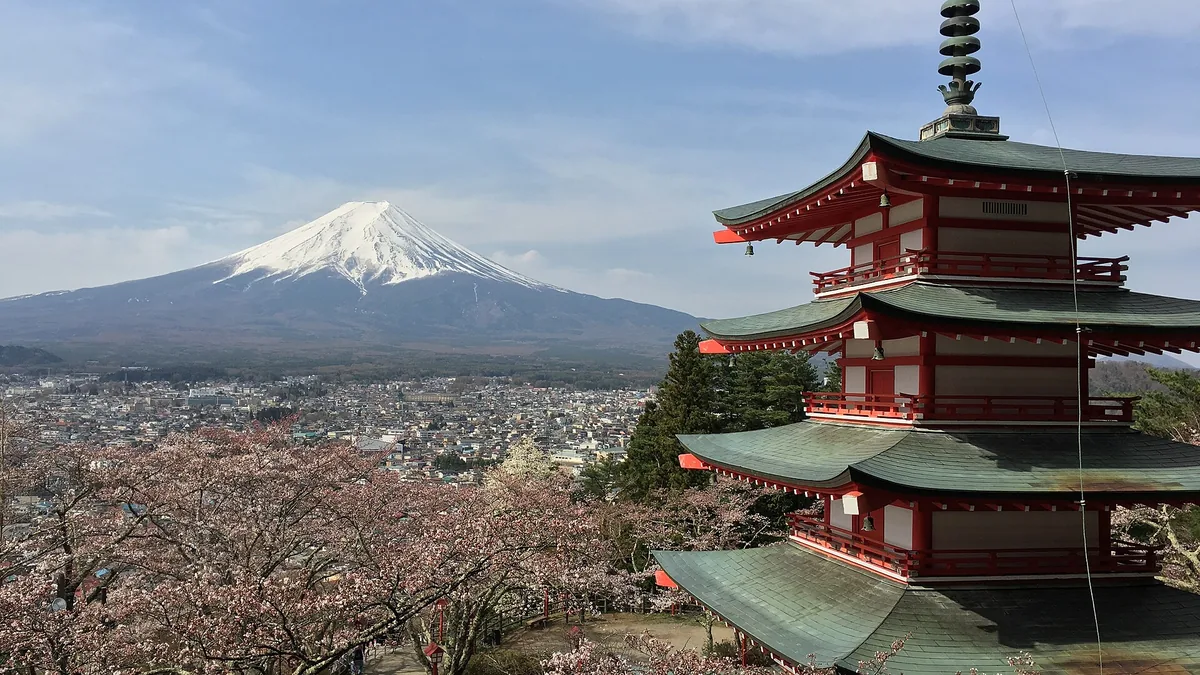
At 3,776 metres, Fuji is Japan's highest mountain, a stratovolcano visible from Tokyo on clear winter mornings and from half the postcards ever printed in the country.
A mountain with a geography and a biography
Fuji is an active stratovolcano that last erupted in 1707, when the Hoei eruption dropped ash on Edo, today's Tokyo, 100 kilometres away. The summit cone we see was built by later eruptions on top of the older Komitake and Old Fuji volcanoes. It is a sacred mountain in Shinto and Buddhist practice, and climbing it has been a pilgrimage for centuries, which is why the routes end at a shrine rather than a viewpoint.
Climbing season and the sunrise queue
The official climbing season runs from early July to early September, when the huts and trail stations are open. Most climbers start in the afternoon to reach the summit for go-raiko, the sunrise. The Yoshida Trail from the Fuji Subaru Line 5th Station is the most popular and the most crowded; the Subashiri and Gotemba trails are quieter and steeper. Off-season climbing is for experienced winter mountaineers only.
When the view of the mountain matters more than the view from it
For many travellers the better experience is not the summit but the frame: Chureito Pagoda in Arakurayama Sengen Park, with cherry trees in April; the Fuji Five Lakes, especially Lake Kawaguchi and Lake Yamanaka; and the shinkansen window between Shin-Yokohama and Mishima, where the mountain fills the carriage windows on a clear day.
Three things not to miss
- Goraiko sunrise from the summit crater rim
- Chureito Pagoda with Fuji and cherry blossom, mid-April
- The reflection view from Lake Kawaguchi on a still morning
In pictures
Every photo in this guide is freely licensed, credited, and available at full resolution from Wikimedia Commons.
Nearby in the atlas