Kansai
Nara
Japan's first capital, a deer park and a temple that dwarfs everything
Photo: Jakub Hałun · CC BY 4.0
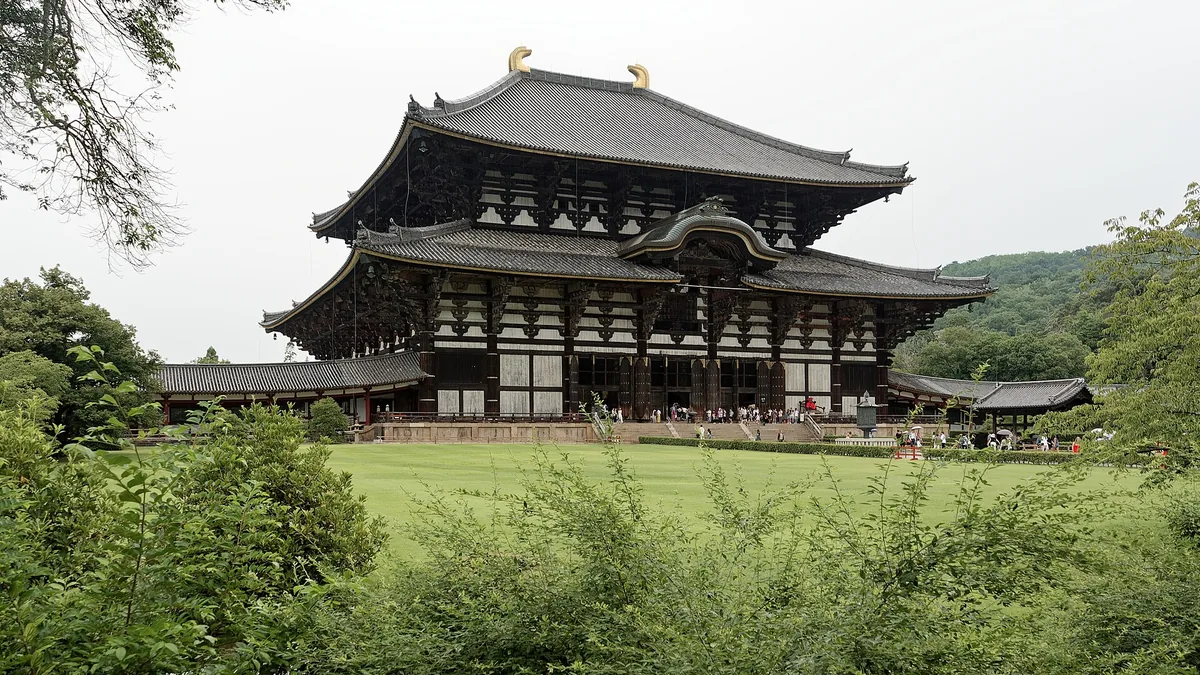
The capital before Kyoto, with a park full of free-roaming sika deer and Todai-ji, the largest wooden building in the world for most of its history.
A capital built in the eighth century
Nara was Japan's capital from 710 to 784, and the city preserves the scale of that ambition. Todai-ji's Great Buddha Hall houses a 15-metre bronze Buddha cast in 752, and the hall itself, rebuilt in 1709, is still one of the largest wooden structures on Earth. Kasuga Taisha, the shrine at the eastern edge of the park, is famous for its 3,000 stone and bronze lanterns.
The deer are not a photo prop
About 1,200 sika deer live in Nara Park and are officially protected as messengers of the gods. They bow for crackers, and they will also headbutt you for them. The park policy asks visitors to feed only the approved shika senbei sold in the park, and not to tease the animals into bowing repeatedly.
The quiet corner most visitors miss
Walk east past Kasuga Taisha into the Kasugayama Primeval Forest, a protected old-growth woodland that has been off-limits to logging for over a thousand years. The trail up Mount Wakakusa opens in winter and gives a view over the whole basin. In spring, the Yoshino cherry area south of the city is one of Japan's three great blossom sites.
Three things not to miss
- Todai-ji's Great Buddha Hall in the early morning light
- The lantern-lined approach to Kasuga Taisha
- Deer in Nara Park against the backdrop of the temple roofs
In pictures
Every photo in this guide is freely licensed, credited, and available at full resolution from Wikimedia Commons.
Nearby in the atlas