Kansai
Kyoto
A thousand years of capital, arranged around 1,600 temples
Photo: Luka Peternel · CC BY-SA 4.0
Japan's imperial capital from 794 to 1868, and still the country's most concentrated collection of gardens, temples, tea houses and craft workshops.
A city designed as a grid, then filled with exceptions
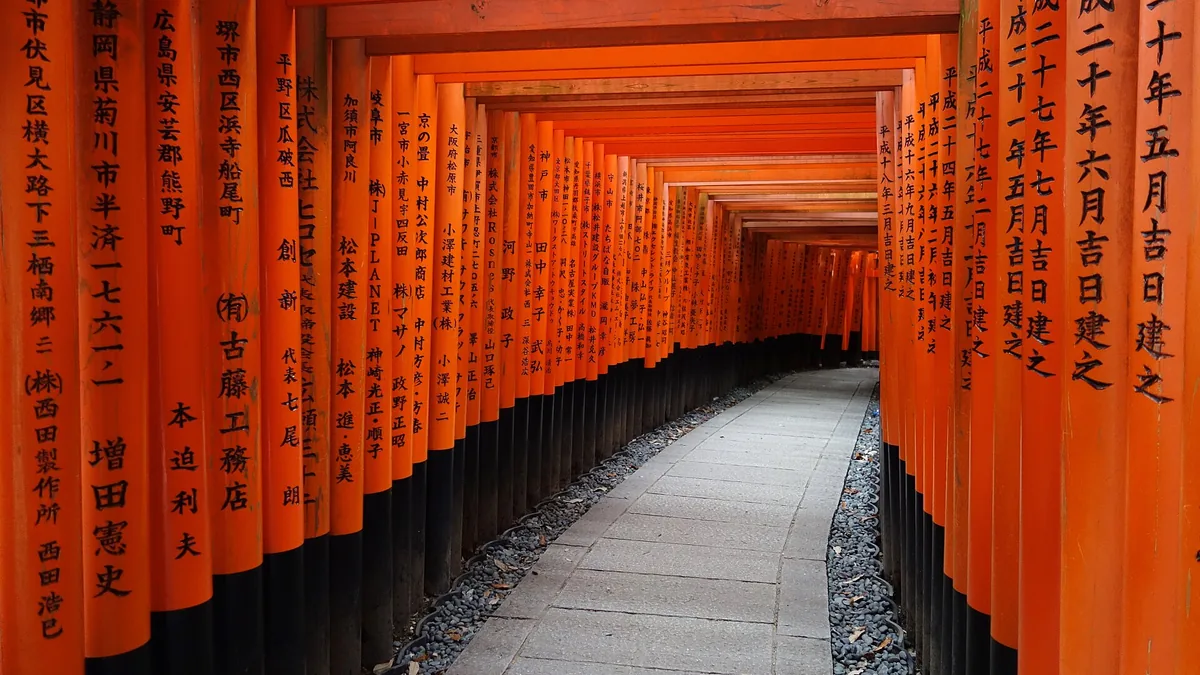
Kyoto was laid out on the Chinese model, with a rectilinear street plan that still defines the city centre. But the best of Kyoto is in the exceptions: the Fushimi Inari shrine's 10,000 vermilion torii gates climbing Mount Inari; the Zen rock garden at Ryoan-ji; the moss and pond gardens of Saiho-ji, the so-called Moss Temple, which requires a reservation by postcard or online.
The seasons are the calendar
Kyoto's cultural year is organised around the cherry blossom front in late March and early April, and the maple foliage in mid-to-late November. Both are spectacular and both are crowded. If you can travel in early June or early December you get the same architecture with room to breathe, and the gardens are green and quiet.
Beyond the headline sites
The Arashiyama bamboo grove is short and busy by mid-morning; the better version is the walk up to Okochi Sanso villa, or the river path at Togetsukyo. The historic geisha district of Gion is a residential neighbourhood first: private lanes are closed to photography, and the atmosphere is best kept by walking quietly. For crafts, the Nishijin weaving district and the Kiyomizu-yaki ceramics kilns still run workshops.
Three things not to miss
- Fushimi Inari's torii gates before 8 am
- The stone garden at Ryoan-ji, and the Moss Temple by reservation
- Maple season along the Philosopher's Path, late November
In pictures
Every photo in this guide is freely licensed, credited, and available at full resolution from Wikimedia Commons.
Nearby in the atlas