Trentino-Alto Adige & Veneto
Dolomites
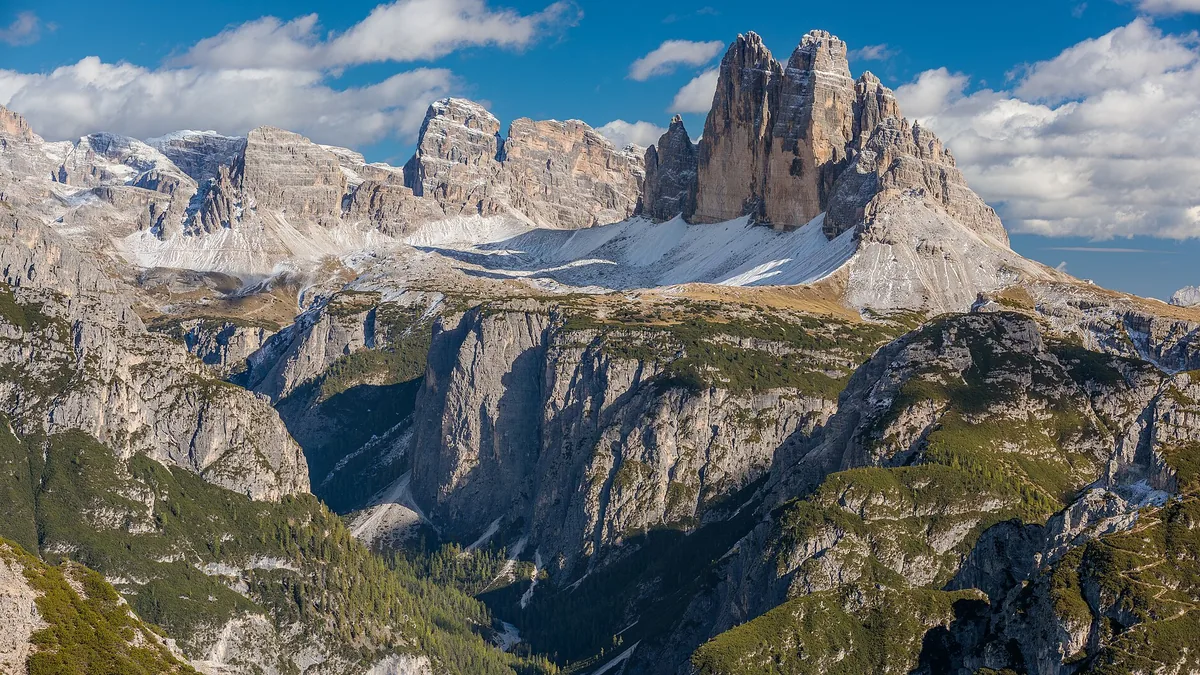
Limestone towers that turn pink at sunset
Photo: Ximonic (Simo Räsänen) · CC BY-SA 4.0
A range of pale limestone peaks in north-eastern Italy, part of the Alps but geologically distinct, with vertical walls, high plateaus and some of Europe's best mountain roads.
A coral reef, lifted three kilometres
The Dolomites are the remains of a Triassic carbonate platform, a tropical reef and lagoon system that formed about 250 million years ago and was later pushed up by the collision of the African and European plates. The rock is dolomite, a magnesium limestone that erodes into towers and spires rather than rounded peaks. At sunset the cliffs glow pink and orange, an effect known as enrosadira.
The passes and the via ferrata
The Great Dolomites Road, built between 1901 and 1909, runs from Bolzano to Cortina through the Sella, Pordoi and Falzarego passes. The region has hundreds of kilometres of via ferrata, protected climbing routes with steel cables and ladders that date from the First World War, when the front line ran through these mountains. Guides are available in every valley town.
Summer and winter
Summer is for hiking: the Alpe di Siusi, the Tre Cime di Lavaredo circuit and the Rosengarten are the classic walks, with cable cars cutting out most of the ascent. Winter is skiing, with the Dolomiti Superski pass covering 1,200 kilometres of runs. June and September are the quiet months in between, with open lifts, green meadows and far fewer people.
Three things not to miss
- The Tre Cime di Lavaredo at sunset
- Enrosadira on the Rosengarten from the Alpe di Siusi
- Driving the Pordoi and Sella passes
In pictures
Every photo in this guide is freely licensed, credited, and available at full resolution from Wikimedia Commons.
Nearby in the atlas