Tuscany
Tuscany
Cypress roads, hill towns and a landscape that has been designed
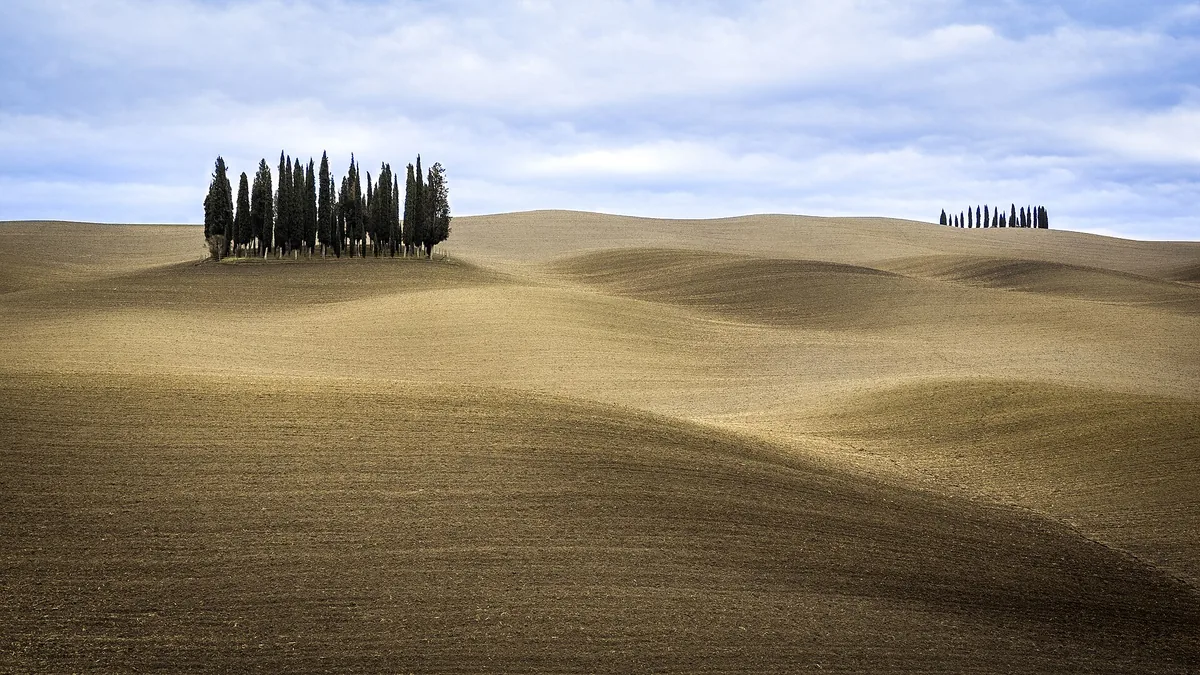
Photo: Carlo cattaneo fotografie · CC BY-SA 4.0
The rolling clay hills of the Val d'Orcia and the Chianti wine country, where the combination of farms, cypress-lined roads and hilltop villages has been essentially unchanged since the Renaissance.
A landscape with a plan
Tuscany's beauty is not accidental. The sharecropping system, the mezzadria, organised the land into a patchwork of farms, each with a villa and a row of cypress for windbreak and shade. The Val d'Orcia, a UNESCO World Heritage property since 2004, is the clearest surviving example: wheat fields, vines, olive groves and fortified hill towns arranged to be seen from a distance.
The towns
Siena is the great medieval city, built around the shell-shaped Campo and its twice-yearly Palio horse race. San Gimignano preserves a skyline of medieval towers; Montepulciano and Montalcino are wine towns on ridges; Pienza is a Renaissance ideal city built by Pope Pius II. Florence is the cultural capital, but the smaller towns are where the landscape and the architecture meet.
Eating and driving
The food is what the landscape produces: ribollita, pappa al pomodoro, pecorino from Pienza, and the Chianti Classico and Brunello wines. A car is useful for the countryside, but the SS222 Chiantigiana between Florence and Siena is a slow, winding road; the regional trains are not much slower between the main towns. Harvest in the Val d'Orcia is late June for wheat and September for grapes.
Three things not to miss
- The Val d'Orcia from Pienza at sunrise
- The Palio in Siena, in July and August
- A harvest lunch at a Chianti estate
In pictures
Every photo in this guide is freely licensed, credited, and available at full resolution from Wikimedia Commons.
Nearby in the atlas