Lazio
Rome
A city where three thousand years of building is still in use
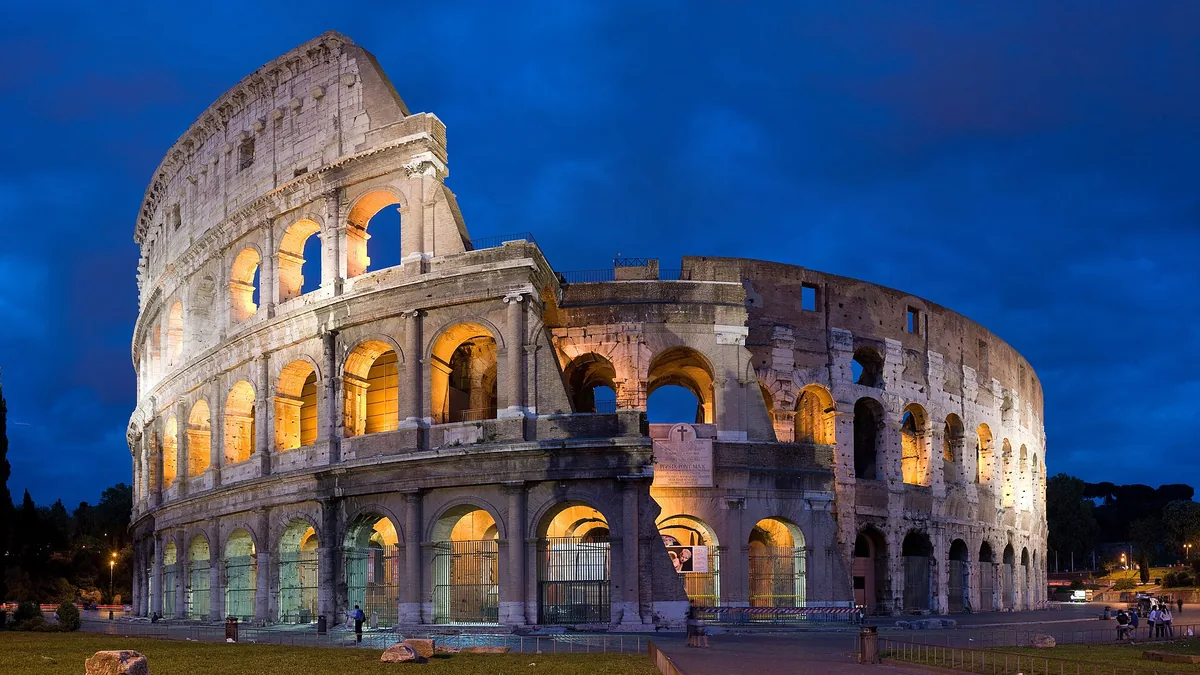
Photo: Diliff · CC BY-SA 2.5
Not an open-air museum but a working capital built on top of, and out of, its own ruins: a city where the past is not preserved so much as still inhabited.
The centre of a world, and its leftovers
Rome's historic centre contains the Colosseum, the Forum, the Pantheon and more than 900 churches within about seven square kilometres. The Pantheon is the best-preserved Roman building anywhere, with a concrete dome 43 metres across that was the largest in the world for 1,300 years. The Forum is a stratified site: Republican temples, Imperial basilicas and medieval churches built into the ruins of the same spot.
A city of fountains and squares
Rome's fountains are its public sculpture: the Trevi, the Four Rivers in Piazza Navona, and the baroque squares of the centro storico. The city has more than 2,000 public fountains, and the water is drinkable from the street fountains (nasoni) throughout the centre. Walking between the Piazza del Popolo, the Spanish Steps, the Pantheon and Piazza Navona takes about two hours, and it is the best thing to do in Rome.
Eating and timing
Rome eats late: lunch from 13:00, dinner from 20:30. The classic dishes are the four pastas of the city (carbonara, amatriciana, cacio e pepe, gricia) plus artichokes in season and the pizza at the forno in the Campo de' Fiori. Book Colosseum and Vatican Museums tickets online; the free first-Sunday entry is extremely crowded. April, May, September and October are the best months.
Three things not to miss
- The Pantheon's oculus at midday
- The Colosseum and Forum in the early morning
- The view from the Janiculum Hill at sunset
In pictures
Every photo in this guide is freely licensed, credited, and available at full resolution from Wikimedia Commons.
Nearby in the atlas