Hiroshima
Itsukushima
A shrine that appears to float when the tide comes in
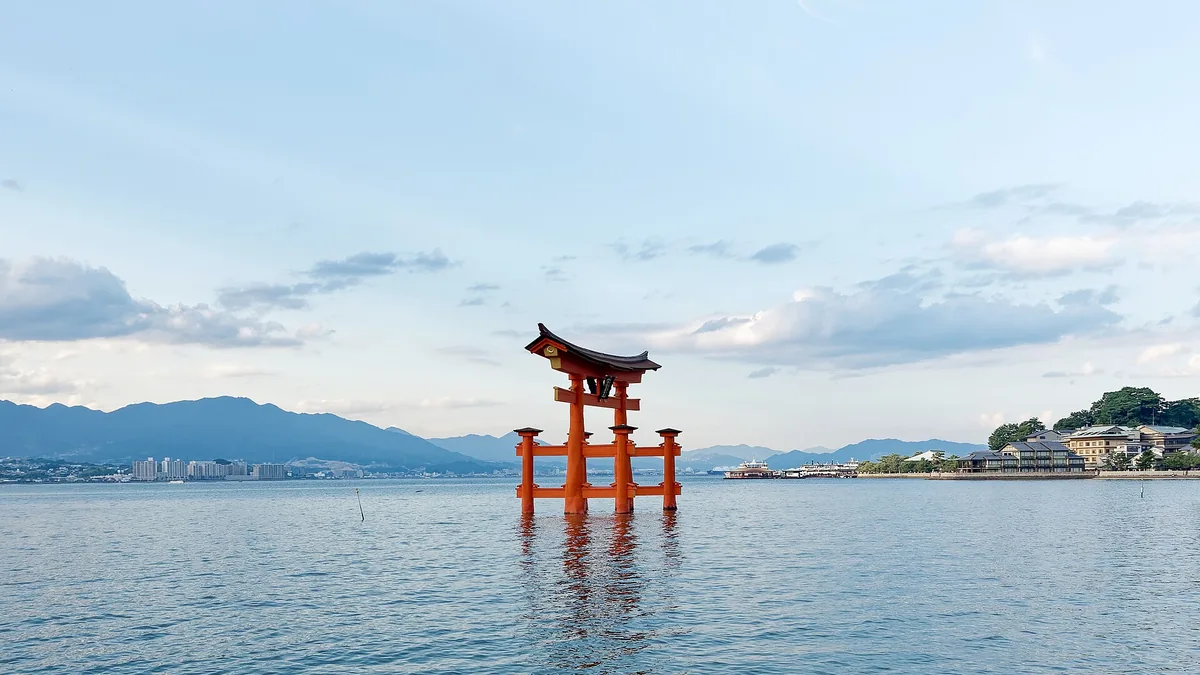
Photo: Jakub Hałun · CC BY 4.0
Miyajima island's Itsukushima Shrine, with its vermilion torii standing in the shallows, is one of the three classic views of Japan.
Built for the water
The shrine was first built in the sixth century and reached its present form in 1168, under the patronage of the Heike clan. Its corridors stand on stilts over the tidal flats, so at high tide the whole complex appears to float. The great torii in the bay is 16 metres tall and has stood in this position since 1875; it is not anchored into the seabed, but held by its own weight and six supporting legs.
The island is more than the shrine
Behind the shrine, Mount Misen rises 535 metres and is criss-crossed by trails through primeval forest, with a ropeway for those who would rather not climb. Deer wander the streets, the Omotesando shopping street sells grilled oysters and maple-leaf cakes, and the island's quiet eastern coves are empty even in high season.
Tide tables are the itinerary
High tide gives the floating-shrine photograph; low tide lets you walk out to the torii's base. Tide tables are posted at the ferry terminal and online, and serious photographers plan around them. The island is a 10-minute ferry from Miyajimaguchi, which is 25 minutes by train from Hiroshima.
Three things not to miss
- The torii at high tide from the shrine's west corridor
- Walking to the base of the torii at low tide
- The view from Mount Misen's observatory over the Seto Inland Sea
In pictures
Every photo in this guide is freely licensed, credited, and available at full resolution from Wikimedia Commons.
Nearby in the atlas