Centre-Val de Loire
Loire Valley
A river of chateaux, vineyards and white limestone
Photo: Krzysztof Golik · CC BY-SA 4.0
The Loire is France's longest river, and its valley holds more than 300 chateaux, from medieval fortresses to Renaissance palaces built by the kings of France.
A river that was a border
In the Middle Ages the Loire marked the frontier between the French crown and English-held territory, which is why the valley is dense with fortified castles. When Charles VII moved his court to the Loire in the 15th century, the fortresses were rebuilt as palaces, and the result is the transition from defensive to decorative architecture visible across the region.
The essential chateaux
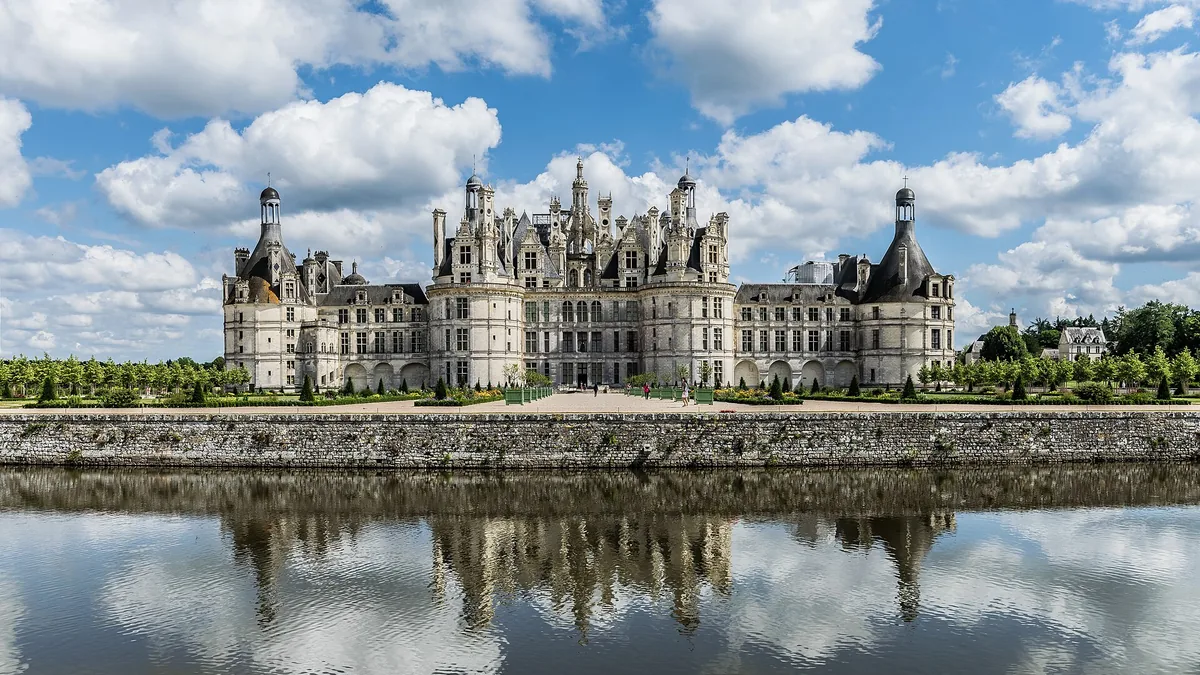
Chambord is the largest, a Renaissance hunting lodge with 440 rooms and a double-helix staircase attributed to Leonardo's circle. Chenonceau crosses the river on a bridge gallery, which makes it the most photographed in the valley. Cheverny, Ussé and Villandry are smaller and, in the case of Villandry, famous for gardens rather than architecture. Choose three or four, not ten: each takes a couple of hours.
Cycling and wine
The Loire a Velo route follows the river for nearly 900 kilometres, and the sections between Blois, Amboise and Tours are flat, signposted and easy. The valley's wines are the other reason to come: Sancerre and Pouilly-Fume upstream, Vouvray and Chinon in Touraine, and Muscadet at the river's mouth. Most estates welcome visitors, and the tasting rooms are less formal than in Bordeaux.
Three things not to miss
- Chambord's roofline from the terrace
- Chenonceau's gallery over the River Cher
- A day on the Loire a Velo between Amboise and Blois
In pictures
Every photo in this guide is freely licensed, credited, and available at full resolution from Wikimedia Commons.
Nearby in the atlas