Paris
Eiffel Tower
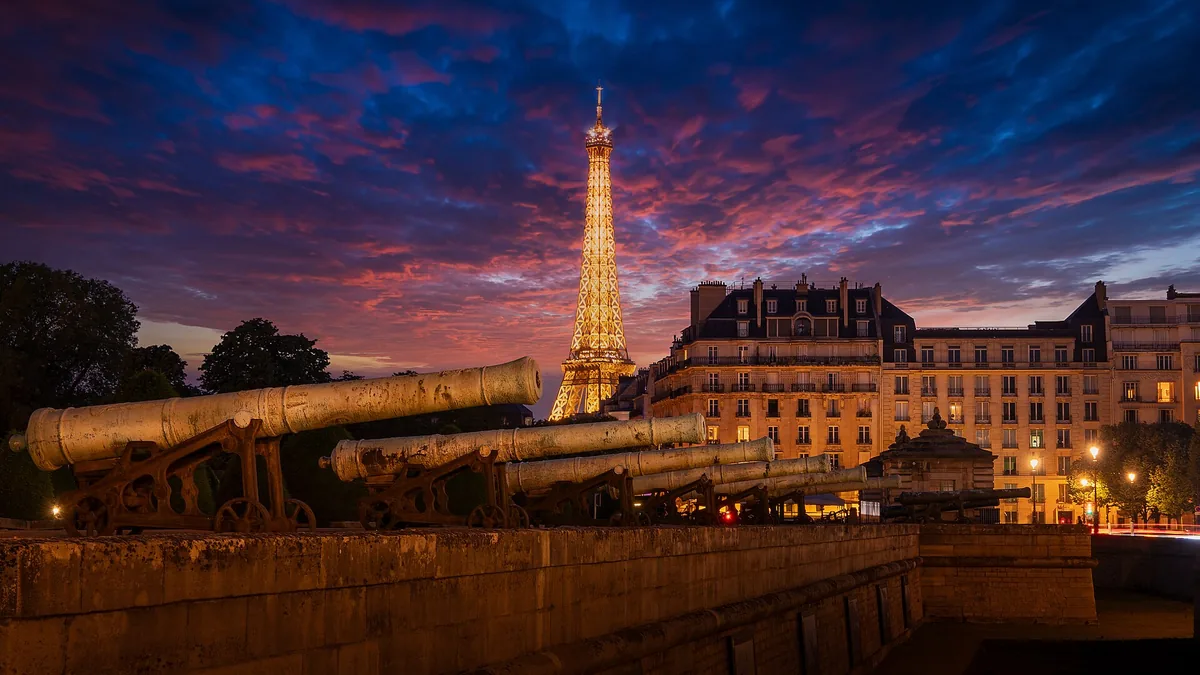
An iron lattice that was supposed to be temporary
Photo: Pierre Blaché from Paris, France · CC0
Built for the 1889 Exposition Universelle and meant to stand for twenty years, the Eiffel Tower is now the most visited paid monument in the world.
Engineering as spectacle
Gustave Eiffel's tower is 330 metres tall including the antenna, and it was built in just over two years from 18,038 wrought-iron pieces held together by 2.5 million rivets. The design works because the iron lattice lets wind pass through rather than push against it, and because the curve of the legs follows the line of the wind load. The lifts, which run on a hydraulic system designed for the tower, are themselves a piece of engineering history.
The view is the point, and the view of it is too
The second floor at 115 metres gives the best balance of height and detail; the summit, at 276 metres, is the classic. But the tower is arguably better seen than climbed: from the Trocadero at sunrise, from the Champ de Mars at the hour of the sparkle, from the Rue de l'Universite, or from the Montparnasse Tower, the only place in the city where you can photograph Paris without the tower in the frame.
Practical Paris
Book summit tickets online weeks ahead; the stairs to the second floor are cheaper, shorter queues, and a genuinely good climb. The tower sparkles for five minutes on the hour after dark until 1 am. Security means no large bags, and the area around the Champ de Mars is best avoided after midnight.
Three things not to miss
- The first sparkle at nightfall, seen from the Trocadero
- Climbing the stairs to the second floor
- The view north-west from the summit across the Seine
In pictures
Every photo in this guide is freely licensed, credited, and available at full resolution from Wikimedia Commons.
Nearby in the atlas