Wyoming, Montana & Idaho
Yellowstone
The world's first national park is also its most volatile
Photo: Carsten Steger · CC BY-SA 4.0
A volcanic plateau the size of a small country, sitting on top of a magma reservoir that has shaped every geyser, terrace and river you walk past.
A park built on fire
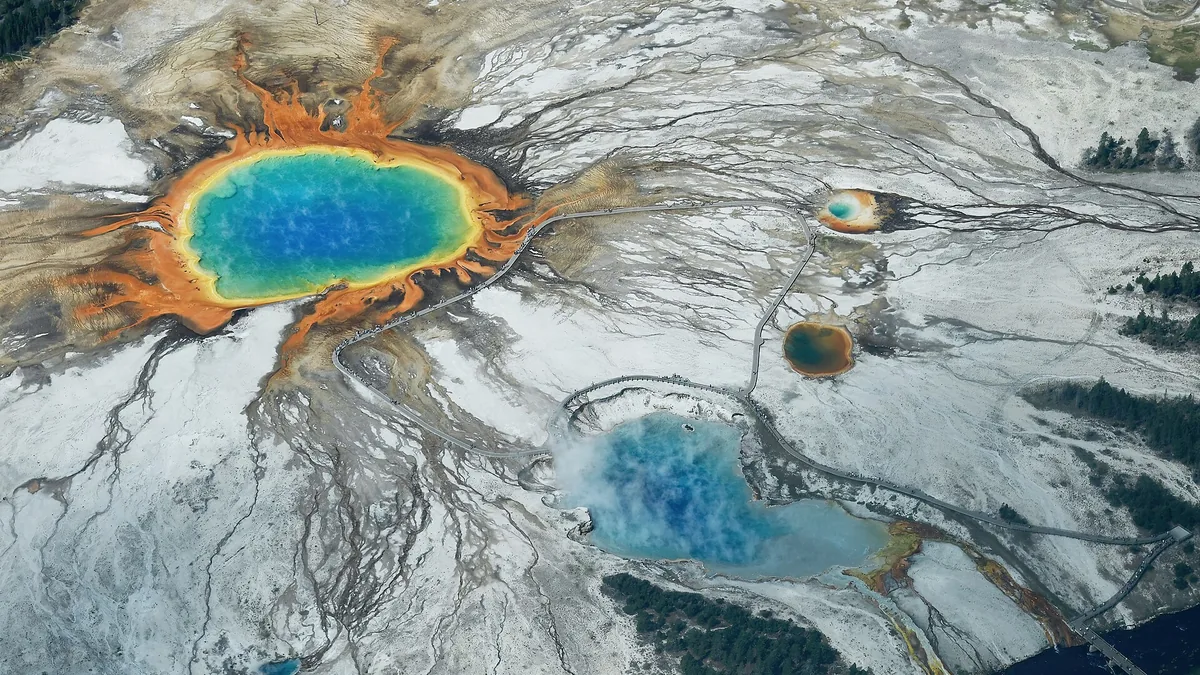
Yellowstone sits inside a caldera that last erupted roughly 640,000 years ago. The heat beneath it drives more than 10,000 hydrothermal features, from hissing fumaroles to the predictable plumes of Old Faithful. Grand Prismatic Spring is the signature sight: a 110-metre pool whose blue centre and orange bacterial rings are best seen from above, on the Fairy Falls overlook.
The roads are the shortcut, the trails are the story
Most visitors never leave the Grand Loop Road, and they see a fraction of the park. A few hours on foot changes the experience: the boardwalks at Mammoth Hot Springs, the Falls of the Firehole, the trail from Artists' Point down to the canyon rim. Wildlife is not optional here, either, as bison regularly close the road for twenty minutes at a time.
Where to stay and when to go
Book lodges inside the park a year ahead, or base yourself in West Yellowstone or Gardiner and enter early. Late June and July bring wildflowers and crowds; the first two weeks of September add elk bugling and cold, clear mornings to the same scenery. Winter closes the south and east entrances but leaves the northern road open to Lamar Valley, the best wolf-watching corridor in the lower 48.
Three things not to miss
- Old Faithful erupting on a 90-minute rhythm
- Grand Prismatic Spring from the Fairy Falls overlook
- The Grand Canyon of the Yellowstone from Artists Point
In pictures
Every photo in this guide is freely licensed, credited, and available at full resolution from Wikimedia Commons.
Nearby in the atlas