Fiordland National Park
Milford Sound
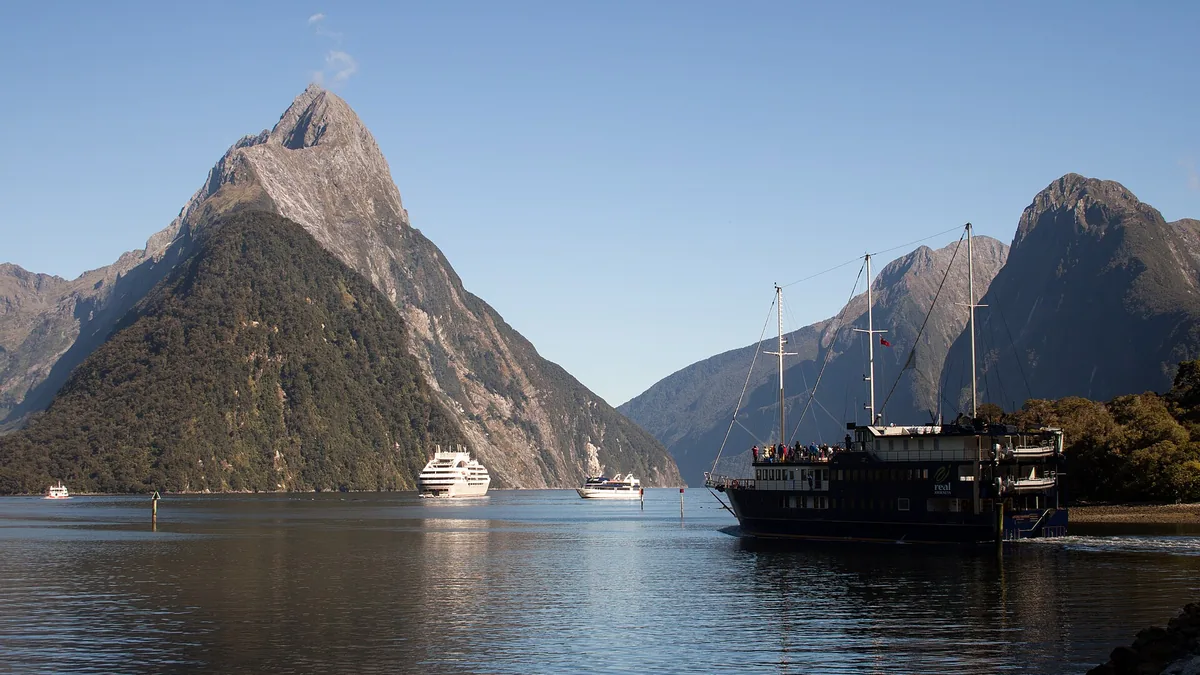
A fjord where the cliffs rise a kilometre from the water
Photo: Szilas · Public domain
Mitre Peak rises 1,692 metres straight out of the water at the head of Milford Sound, the most famous of the 14 fjords in Fiordland National Park.
A valley drowned by the sea
Milford Sound is a fiord, a glacial valley that was flooded when the sea rose after the last Ice Age. The ice carved a U-shaped trough, and the cliffs on either side drop almost vertically below the waterline. The sound is 15 kilometres long and up to 400 metres deep, and the rainfall, around 6,800 mm a year, feeds hundreds of temporary waterfalls that appear within minutes of a shower.
Getting there is part of it
The road from Te Anau, 120 kilometres, passes through the Homer Tunnel, a 1.2-kilometre hole driven through the mountains between 1935 and 1954. The drive takes about two hours and should not be rushed: the Eglinton Valley, the Mirror Lakes and the Chasm are all on the way. The alternative is a scenic flight from Queenstown, which lands at Milford and gives a view of the fiord from above.
On the water
Cruises run from the small harbour at the head of the sound, from about 90 minutes to a full day. Kayaking is the better experience if the weather holds, and the underwater observatory at Harrison Cove shows the black coral that grows in the fiord's freshwater-stained, dark water. Sandflies are relentless: bring repellent.
Three things not to miss
- Mitre Peak reflected in the fiord on a calm morning
- The waterfalls after rain, appearing within minutes
- Kayaking beneath the cliffs at Harrison Cove
In pictures
Every photo in this guide is freely licensed, credited, and available at full resolution from Wikimedia Commons.
Nearby in the atlas