Vatnajokull National Park
Jokulsarlon
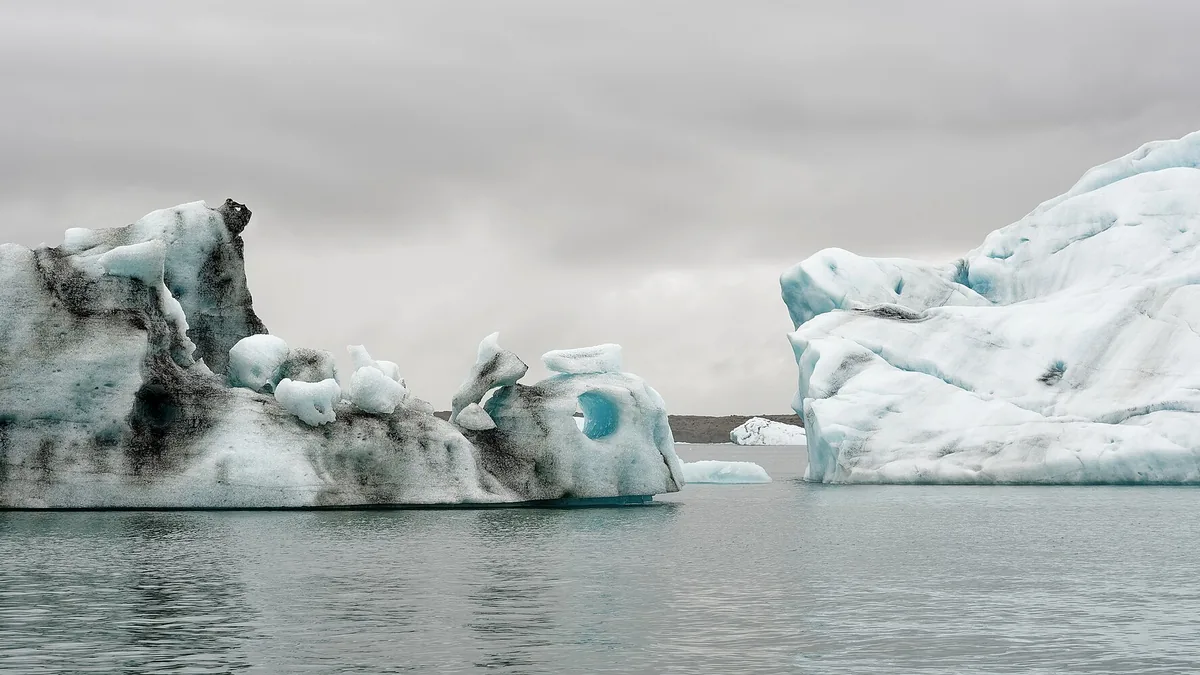
An iceberg lagoon where the ice is older than the country
Photo: Jakub Hałun · CC BY 4.0
A glacier lagoon at the edge of the Vatnajokull ice cap, where calved icebergs drift toward the sea and wash up, clear as glass, on Diamond Beach.
The making of a lagoon
Jokulsarlon formed in the 1930s, when the retreating Breidamerkurjokull glacier left a deep depression that filled with meltwater. Since then the glacier has retreated several kilometres, and the lagoon has grown to about 18 square kilometres and over 200 metres deep in places. The icebergs calve from the glacier front, drift on the tide and wash out through a short channel to the Atlantic.
Diamond Beach and the boats
The channel mouth is called Diamond Beach, where the surviving ice pieces strand on black sand. The ice is dense, thousands of years old, and often clear blue. Amphibious boat tours and inflatable zodiacs run on the lagoon from roughly April to October, getting close to the icebergs without touching them. The lagoon freezes in winter and the boats stop operating.
Safety and the light
The lagoon is at the edge of a retreating glacier, and the ice is unstable: never walk onto the glacier or climb the icebergs. The best light is early morning and late evening, and in winter the low sun turns the ice gold. It is a two-hour drive from Skaftafell and four and a half hours from Reykjavik, so it works best as an overnight stop rather than a day trip.
Three things not to miss
- Icebergs drifting in the lagoon at sunrise
- Ice on the black sand of Diamond Beach
- A zodiac tour among the bergs
In pictures
Every photo in this guide is freely licensed, credited, and available at full resolution from Wikimedia Commons.
Nearby in the atlas